Ditton supplies Tolomatic linear actuators for long-stroke and high-force motion. Tolomatic built the first rodless cylinder, and their electric range now covers drop-in replacements for both pneumatic and hydraulic cylinders where control or energy cost justifies the change.
Pneumatic or electric?
- Stroke — beyond roughly one metre a rod cylinder buckles. Rodless designs carry the load on an internal bearing and keep the envelope to little more than the stroke.
- Control — pneumatics give two positions cheaply. If you need mid-stroke positioning, programmable profiles or force control, electric is the honest answer.
- Duty and energy — compressed air is expensive per unit of work. On high-cycle applications electric often repays the higher capital cost; on low-cycle or simple end-to-end moves, pneumatic remains cheaper and simpler.
- Sealing — band cylinders use a sealing band over the slot. Magnetically-coupled units are fully sealed, which suits dirty or wash-down environments.
- Replacing hydraulics — electric rod actuators remove the power unit, hoses and leak risk, but check duty cycle and thrust against the hydraulic figures rather than assuming parity.
Send stroke, load, orientation, cycle time and required positioning accuracy.
-
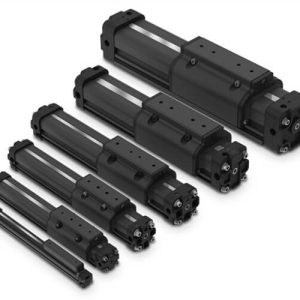
Tolomatic BC2 Pneumatic Rodless Band Cylinder
Send Inquiry -
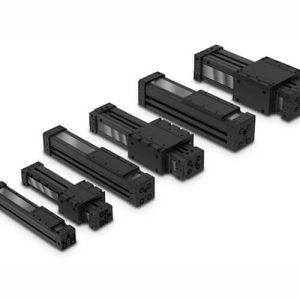
Tolomatic BC3 Heavy-Duty Pneumatic Rodless Band Cylinder
Send Inquiry -
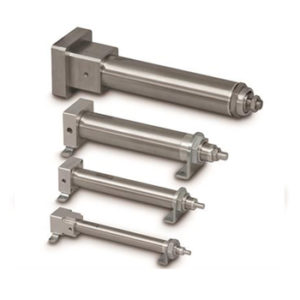
Tolomatic ERD Series Electric Rod Cylinder (Pneumatic Replacement)
Send Inquiry -
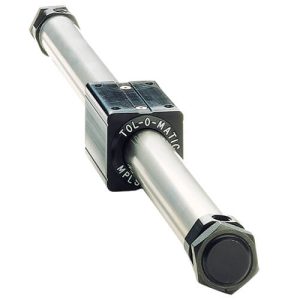
Tolomatic MG Magnetically-Coupled Rodless Pneumatic Cylinder
Send Inquiry -

Tolomatic RSA-ST High-Force Electric Rod Actuator (Hydraulic Replacement)
Send Inquiry